
Chevrolet Alternators
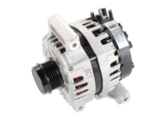
Chevrolet alternators supply electricity while the engine is running, supporting the battery, lighting, climate system, ignition, and vehicle electronics. This category covers replacement units for compatible Chevrolet cars, crossovers, SUVs, vans, and trucks, including applications with different engines and factory electrical packages.
Choosing a genuine Chevrolet alternator helps maintain the original mounting geometry, connector layout, pulley position, and charging capacity. Those details matter because two units that look similar may not manage the same electrical load or fit the same bracket arrangement. Browse the available options, enter your vehicle information, and locate an OEM charging component built for your specific Chevrolet application.

Alternator

Alternator


Alternator

Alternator

Alternator

Alternator

Alternator

Alternator


Alternator
No results found for "alternator". Here are some helpful search tips:
- Search by a part name. Example: water pump.
- Be less specific. Example: brake instead of ceramic brake.
- Remove information such as make, year or model.
- Can't find the part you are looking for? Contact us and we'll find it for you!
What to Check Before Ordering a Chevrolet Alternator
TL; DR: Confirm more than the model year. The correct alternator must suit the engine, production configuration, amperage requirement, mounting pattern, electrical connector, and pulley setup. A VIN can help separate visually similar parts and reduce the risk of ordering a unit that installs correctly but charges improperly.
A Chevrolet alternator replacement is often considered after a warning light appears or the battery repeatedly goes flat. Those symptoms deserve attention, but they do not always prove the alternator itself has failed. Corroded terminals, weak grounds, a slipping belt, or a battery with an internal defect can produce similar results. Testing the full charging circuit before purchase may prevent replacing the wrong component.
Think About the Vehicle’s Real Electrical Demand
The alternator’s workload changes constantly. Cooling fans, rear defrosters, heated seats, headlights, fuel-system controls, and cabin electronics can operate at the same time. Trucks or SUVs with factory towing equipment may use a different output specification than a lower-content version of the same model. This is one reason a higher-amperage unit should not be treated as a universal upgrade.
Another useful clue is when the problem occurs. Lights that dim mainly at idle may point toward low charging output, belt slip, or poor connections. Electronics that behave erratically only after the engine warms up can suggest an internal regulator issue. A whining sound that changes with engine speed may come from alternator bearings, but nearby pulleys should be checked as well.
Why Pulley Alignment Deserves Attention
The pulley must sit in the same plane as the other accessory-drive components. Even a small offset can make the belt track poorly, squeal, or wear along one edge. Inspect related belts and hoses before installation, especially if the old unit seized or showed bearing resistance. The accessory belt that turns the alternator is separate from the engine’s timing belts, so the two should not be confused during diagnosis.
Where OEM Fitment Makes a Difference
A Chevrolet OEM alternator is intended to match the vehicle’s original terminal locations, case dimensions, mounting ears, pulley offset, and charging strategy. Some aftermarket units consolidate several applications into one part number. That approach may work in certain cases, but it can introduce differences in wiring orientation, bracket clearance, or output behavior. A genuine Chevrolet alternator offers a more application-specific path when factory-style compatibility is the priority.
Consider the Rest of the Starting and Running System
Charging faults can overlap with ignition or engine-performance complaints. If the vehicle cranks normally but runs roughly, inspect service items such as Chevrolet spark plugs rather than assuming the alternator caused the drivability issue. Likewise, emissions symptoms involving reduced power or exhaust restriction may require separate investigation of Chevrolet catalytic converters.
Key Takeaways
- Use engine, VIN, output rating, connector, and pulley details to verify compatibility.
- Check the battery, grounds, wiring, tensioner, and belt before replacing the unit.
- Do not assume that a higher-amperage alternator is automatically the better choice.
- Factory-matched geometry can simplify installation and preserve belt alignment.
Frequently Asked Questions
Can a failing alternator still charge sometimes?
Yes. Internal components may work intermittently, causing normal voltage during one test and low or unstable output later.
Why does my Chevrolet list more than one alternator?
Engine options, factory equipment, production changes, and electrical-load packages can require different units.
Can a loose belt trigger charging symptoms?
Yes. If the belt slips, the pulley may not spin fast enough to maintain proper output, especially at idle or under heavy electrical demand.